


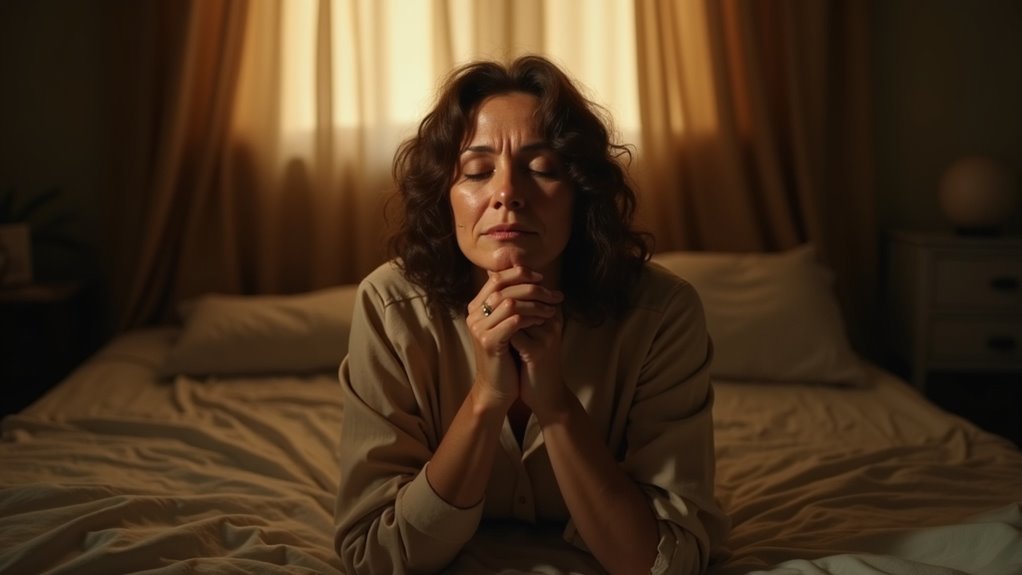


You can calm a panic attack by grounding your senses and slowing your breathing. Try the 5-4-3-2-1 method: name what you see, touch, hear, smell, and taste. Press your feet into the floor or hold something cold. Breathe in through your nose and out through your mouth, making your exhale longer than your inhale. Start early, since panic peaks fast. There’s more to know about staying safe and steady throughout.
Key Takeaways
- Use the 5 4 3 2 1 method to name what you see, touch, hear, smell, and taste to anchor yourself in the present.
- Slow your breathing with box breathing (4 4 4 4) or 4 7 8 breathing, making exhales longer than inhales.
- Get physically safer first by sitting down, leaning on a stable surface, or pulling over if driving.
- Move away from crowded, hot, or overstimulating spaces and step into cooler air with slow, deliberate movements.
- Remind yourself that panic peaks quickly, fades on its own, and cannot harm you.
How Can You Calm a Panic Attack With Grounding and Coping Techniques
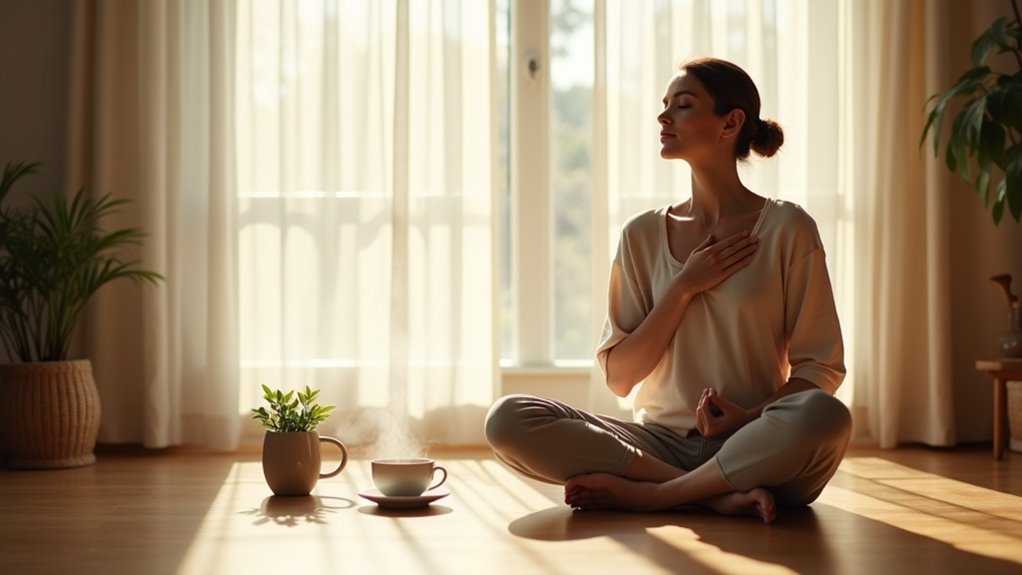
You can calm a panic attack by using grounding and coping techniques that shift your focus back to the present and interrupt the spiral of losing control. Learning how to calm a panic attack starts with redirecting your attention away from frightening sensations and toward what’s real and observable around you. Panic attack grounding techniques, like the 5-4-3-2-1 method, engage your senses to anchor you in the moment. Naming what you see, touch, hear, smell, and taste helps quiet catastrophic thoughts. Panic attack coping skills also include controlled breathing, pressing your feet into the floor, and holding a cold or textured object. Because panic tends to peak quickly, using these strategies early can limit how intense the experience becomes. Support strategies for panic attack victims work best when personalized, with a support network offering comfort and shared coping techniques.
How Can You Make the Situation Physically Safer Before Trying a Coping Technique
Make the situation physically safer by orienting yourself before starting any coping technique. When panic hits, your body can feel unsteady, so sit down or lean against a stable surface to reduce the risk of falling if dizziness or weakness sets in. If you’re driving, pull over and park safely. Move away from crowded, hot, or overstimulating spaces when you can, since these often intensify symptoms. Step outside into cooler air if it’s available. Keep your movements slow and deliberate to avoid adding stimulation or losing balance. Once you’ve secured stable footing and a safe position, you’re better prepared to focus fully on grounding and breathing without worrying about physical harm during the attack’s peak. Managing panic attacks at work is easier with a plan like discreet breathing or stepping away briefly to regain composure.
How Can Slower Breathing Help When Panic Causes Rapid Breathing

Slower breathing helps during a panic attack by restoring your oxygen and carbon dioxide balance and signaling your nervous system that you’re safe. During a panic attack, your breathing often speeds up and turns shallow, which throws off your oxygen and carbon dioxide balance and can worsen symptoms like dizziness, tingling, or chest tightness. Breathe in through your nose and out through your mouth, keeping your exhale longer than your inhale to support the calming response. You can try box breathing: inhale for 4, hold for 4, exhale for 4, hold for 4. Another option is 4 7 8 breathing: inhale for 4, hold for 7, exhale for 8. Repeat for several cycles or about a minute during the peak of distress. This structured rhythm slows escalation and gives your body a steadying focus. Recognizing panic attack signs and symptoms empowers you to apply coping strategies proactively and find relief more swiftly.
How Do Sensory Grounding Muscle Relaxation and Attention Shifting Differ
Sensory grounding, muscle relaxation, and attention shifting each calm panic through a different pathway, though they often overlap in practice. Sensory grounding pulls your focus outward, using sight, touch, sound, smell, and taste to anchor you in the present. Muscle relaxation works inward, releasing the physical tension panic builds by tensing and releasing muscle groups. Attention shifting redirects your mind away from catastrophic thoughts toward a structured task, like counting or describing an object.
| Technique | Primary Focus |
|---|---|
| Sensory grounding | External senses |
| Muscle relaxation | Physical tension |
| Attention shifting | Mental redirection |
You don’t have to choose just one. Many people combine them, pressing feet into the floor while breathing slowly and naming what they see.
What Can You Remind Yourself of While Fear Is Rising

Remind yourself that a panic attack peaks quickly and then fades, it can’t harm you, even when it feels dangerous. Your body’s alarm system has misfired, but the surge of adrenaline will pass. You’ve survived every previous attack, and you’ll move through this one too. Repeating a short, grounding phrase can interrupt the spiral and anchor you until the intensity drops.
A panic attack always peaks and fades, it can’t harm you. The adrenaline will pass, and so will this.
- Picture the fear as a wave that rises, crests, and recedes into calmer water.
- Imagine your racing heart as a false alarm, not a warning of real danger.
- See the tightness in your chest loosening with each slower, longer exhale.
- Visualize yourself standing steady, feet grounded, as the storm inside quietly settles.
You’re safe, and this will pass.
What Reactions Can Reinforce Panic or Make the Episode Harder to Ride Out
Certain reactions can reinforce panic or make the episode harder to ride out. When you fight the sensations directly, you signal danger to your body, which intensifies the physical response. Adding stimulation through rapid movement or pacing can escalate symptoms rather than settle them. Chasing catastrophic thoughts, assuming you’re dying or losing control, feeds the spiral instead of interrupting it. Rushing your breathing or gulping air often worsens dizziness and tightness. Trying to flee every uncomfortable situation reinforces avoidance, teaching your brain that escape equals safety. Instead, slow your movements, keep your exhale longer than your inhale, and let the sensations rise and fall. Remember, panic peaks quickly, so early, calm coping limits how far it climbs.
How Can You Build a Coping Plan Between Attacks
Build a coping plan by practicing grounding skills between episodes, when you are calm. Panic rarely gives you time to plan mid-attack, so the work happens beforehand. When you practice grounding while calm, the skills become automatic, so you can reach for them even when fear floods your thinking. Rehearse the techniques regularly until they feel familiar, not forced.
- Practice the 5 4 3 2 1 pattern during quiet moments, naming what you see, touch, hear, smell, and taste
- Run through box breathing until the rhythm feels natural in your body
- Keep a textured object or cold pack within easy reach at home or work
- Write a short calming phrase you can repeat when thoughts start spiraling
If attacks stay frequent, severe, or disruptive, seek professional evaluation. Building these habits early helps you limit escalation later.
Get Treatment When Coping Techniques Are Not Enough
Path2Purpose provides treatment for panic attacks, anxiety, and other mental health concerns through PHP, IOP, outpatient care, individual and group therapy, and medication management. If grounding techniques help temporarily but panic attacks keep returning or disrupting your daily life, treatment can address the patterns and symptoms behind them. Call (209) 868-3219 to speak with the Path2Purpose team about available treatment options.
Frequently Asked Questions
How Long Does a Typical Panic Attack Usually Last?
A typical panic attack peaks quickly, often within about 10 minutes, and usually eases within 20 to 30 minutes. You might feel intense fear, racing heart, or shortness of breath, but these sensations don’t last forever. Because attacks escalate fast, starting your coping skills early can help limit their intensity. If yours are frequent, severe, or disruptive, it’s worth seeking a professional evaluation to support your long-term wellbeing.
Can Panic Attacks Happen During Sleep or While Resting?
Yes, panic attacks can happen while you’re sleeping or resting, and they can feel especially frightening because they wake you suddenly. Even though you’re not facing an obvious trigger, your body’s alarm response can still activate. When this happens, you can anchor yourself to the present moment by pressing your feet into the floor and using slower, controlled breathing. Remember, the intensity typically peaks quickly, so early coping helps.
Are Panic Attacks Dangerous or Physically Harmful to the Body?
Panic attacks aren’t physically dangerous, even though they feel terrifying. Your body’s triggering a false alarm, flooding you with adrenaline, but it isn’t harming you. The racing heart, chest tightness, and dizziness are uncomfortable, not damaging. These attacks typically peak quickly and pass. Still, if symptoms feel severe or unfamiliar, it’s wise to get checked medically to rule out other conditions. Once cleared, you can trust your body’s fine.
What Medications Are Commonly Prescribed for Recurring Panic Attacks?
Medications for recurring panic attacks often include SSRIs like sertraline or escitalopram, and SNRIs like venlafaxine, which are typically first-line treatments. Your doctor might also prescribe benzodiazepines like lorazepam for short-term relief, though these carry dependency risks. Sometimes beta-blockers help manage physical symptoms. You’ll want to work closely with a prescriber to find what fits your needs, since responses vary. Never adjust doses on your own, always consult your provider first.
How Can I Support Someone Else Having a Panic Attack?
Stay calm and speak in a slow, reassuring voice. Guide them through the 5-4-3-2-1 grounding pattern, naming things they can see, touch, and hear. Encourage controlled breathing, keeping their exhale longer than the inhale. Help them press their feet into the floor to anchor to the present. Don’t dismiss their fear, remind them the attack will peak quickly and pass. If it’s severe or frequent, suggest professional evaluation.