


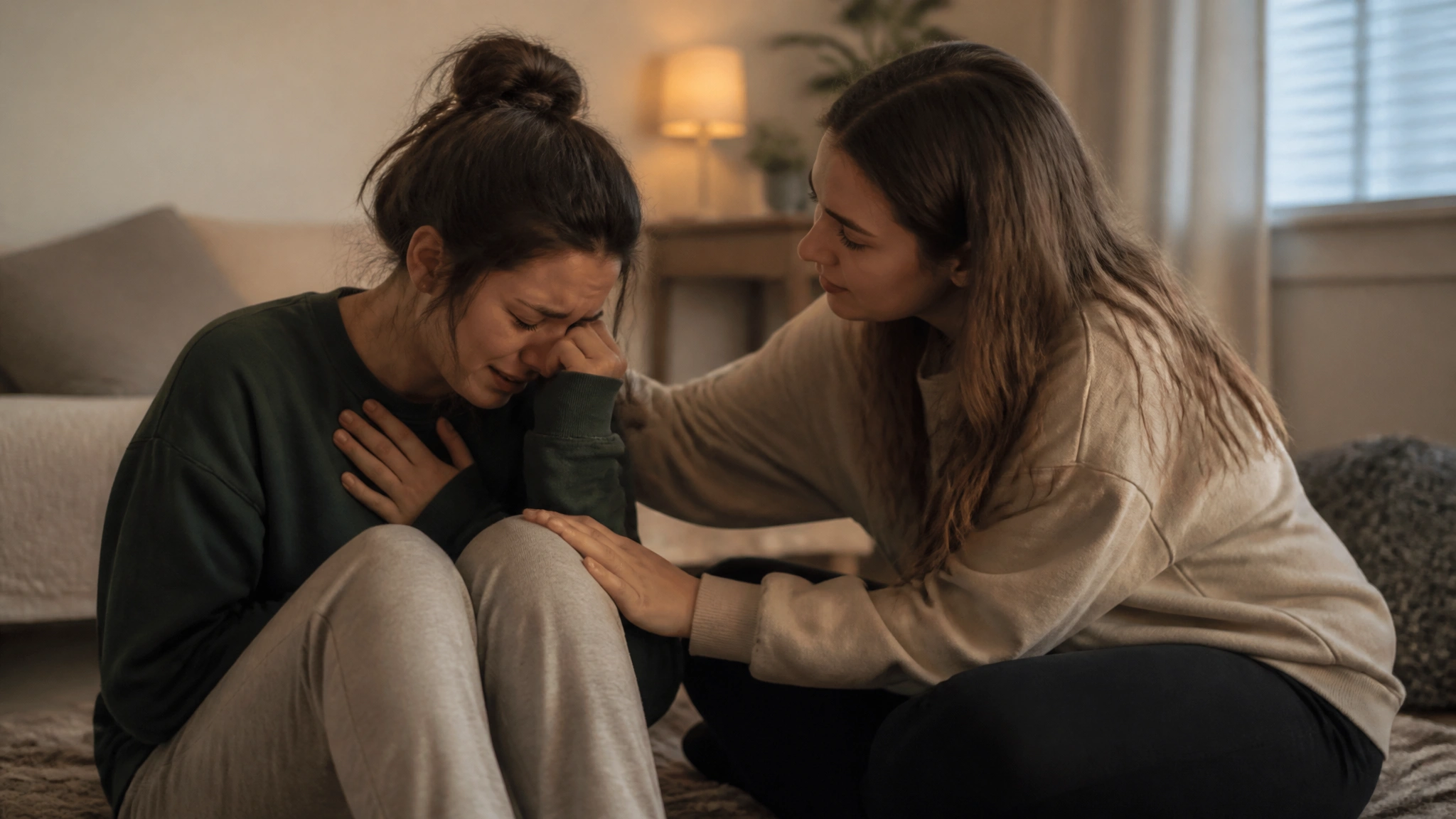
You can help someone through a panic attack by staying calm and keeping your voice slow, steady, and low. Remind them they’re safe and that the episode is temporary and will pass. Use short, clear sentences, and guide slow breathing without forcing it. Ask one simple question at a time, and avoid dismissive phrases like “calm down.” Move toward a quieter space if they can manage it. There’s more you’ll want to know below.
Key Takeaways
- Stay calm with a slow, steady, low voice, and use short, reassuring phrases like “You are safe” and “I am here.”
- Remind them the episode is temporary and will pass, while acknowledging their feelings without judgment or dismissive phrases.
- Guide slow breathing gently and ask only one simple question at a time to avoid overwhelming them.
- Move to a quieter, calmer space with reduced noise, crowds, and bright lights, avoiding unwanted physical contact.
- Call emergency services for severe chest pain, persistent breathlessness, first-ever episodes, or symptoms lasting over 20 minutes.
How Can You Help Someone Who Is Having a Panic Attack

You can help someone who is having a panic attack by keeping your calm presence and using a voice that is slow, steady, and low. Remind the person that the episode is temporary and will pass, and reassure them that safety is present. Speak in short, clear sentences, using phrases like “You are safe” and “I am here.” Effective panic attack support means guiding slow breathing without forcing it, count a steady four-count rhythm and breathe alongside them. When helping someone with panic attack symptoms, move them to a quieter space and use grounding tasks like naming visible objects. Always ask before offering physical contact, and respect their personal space if closeness feels distressing. Grounding techniques for panic attack relief anchor someone in the present by focusing on surroundings, textures, or colors to ease symptoms.
What Can You Say to Help Them Feel Less Alone or Overwhelmed
Say “You are safe” and “I am here” to remind someone who feels isolated by fear that they aren’t facing this alone. During panic attack first aid, keep your language short and reassuring. Let them know the episode is temporary and will pass, since panic peaks and then fades. Avoid phrases like “calm down” or “snap out of it,” which can deepen distress and shame.
Instead, acknowledge what they’re feeling without judgment. You might say, “This is hard, and I’m staying with you.” Ask one simple question at a time, such as “What would help right now?” Your steady presence and calm tone communicate more than any lengthy explanation. Simple, direct reassurance helps them feel understood, supported, and less overwhelmed.
How Can You Reduce Noise Crowding or Other Immediate Stressors
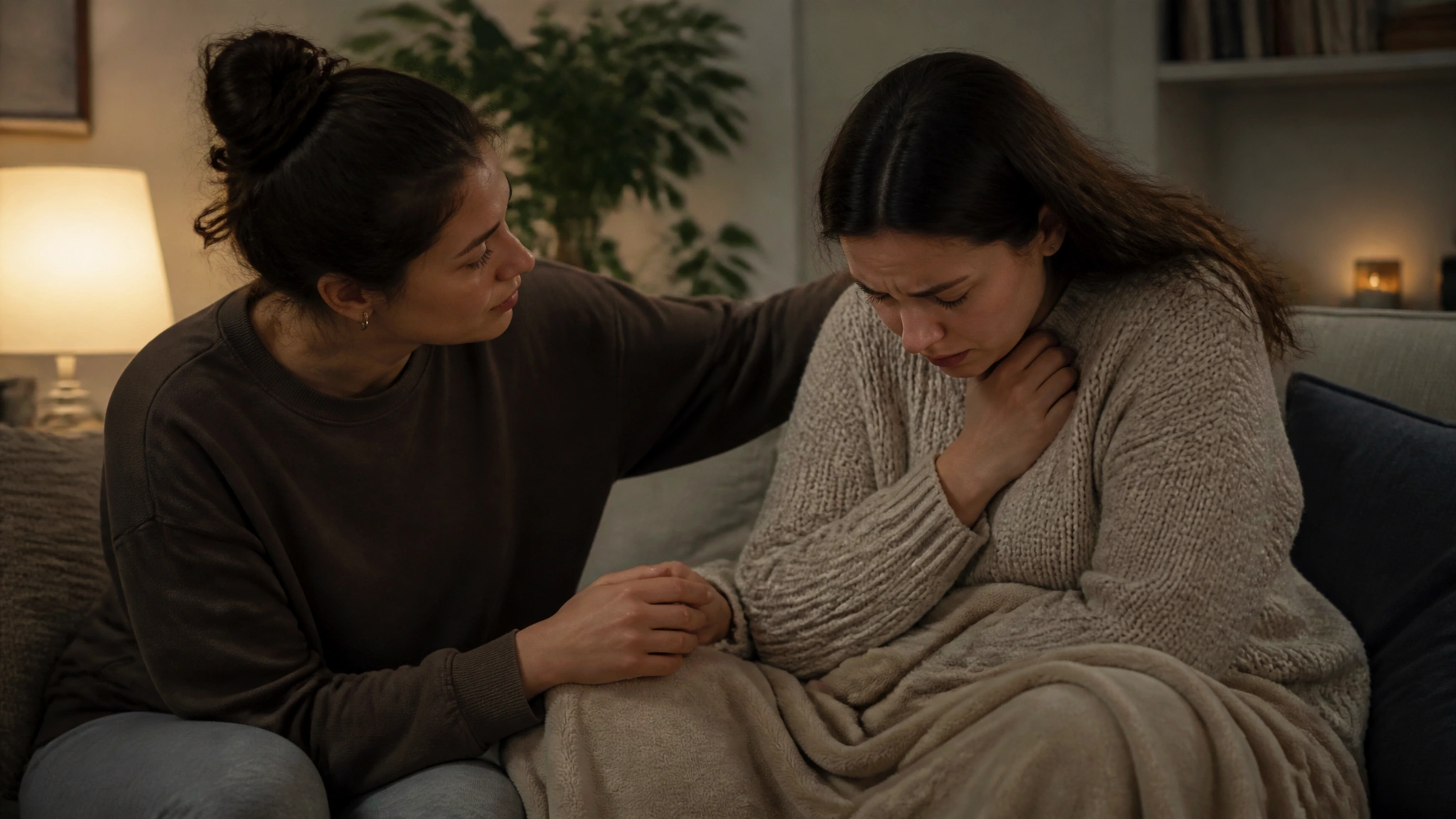
You reduce noise, crowding, or other immediate stressors by guiding the person toward a quieter, calmer space where they feel less exposed. Strong sensory input, loud noise, crowds, bright lights, can intensify fear and prolong symptoms. When you lower these triggers, you help attention settle and give the nervous system room to recover.
Focus on these immediate adjustments:
Small shifts matter: guide them somewhere quieter, soften the lighting, and create space so calm can return.
- Move to a quieter place away from crowds, traffic, or noise whenever the person can manage it.
- Dim or reduce harsh lighting and limit sudden movements around them.
- Create space by asking bystanders to step back, easing the sense of crowding.
These simple changes reduce overwhelming stimulation and let the person concentrate on breathing and grounding until calm returns.
How Should Your Support Change if the Person Wants Space Cannot Speak or Symptoms Worsen
Your support should change based on what the person needs in the moment. If they want space, step back but stay visible so they know you’re near. If they can’t speak, stop asking questions and offer simple yes-or-no gestures instead. If symptoms worsen, watch closely for warning signs that require emergency care.
| Situation | What You’ll Notice | How to Respond |
|---|---|---|
| Wants space | Pulling away, avoiding touch | Step back, stay visible |
| Can’t speak | Silence, nodding only | Use gestures, reduce questions |
| Symptoms worsen | Severe chest pain, breathlessness | Call emergency services |
| Lasting over 20 minutes | Escalating fear, exhaustion | Seek urgent medical help |
| First-ever episode | Confusion, terror | Get help immediately |
Stay flexible and responsive throughout.
What Should You Avoid Saying or Doing During the Episode

Avoid saying “calm down” or “snap out of it,” asking multiple questions, or making unwanted physical contact during a panic attack. What you say matters just as much as what you do. Certain words and actions can intensify fear, deepen distress, and make the episode harder to manage. Your goal is to reduce pressure, not add to it.
Avoid the following:
- Dismissive commands like “calm down” or “snap out of it,” which invalidate what the person’s feeling and heighten frustration.
- Long explanations or multiple questions, which overwhelm an already overloaded mind and scatter their focus.
- Unwanted physical contact, such as grabbing or hugging without asking, which can feel threatening and worsen panic.
Instead, stay calm, keep your words simple, and respect their space until the intense symptoms ease.
When Should You Treat the Symptoms as a Possible Medical Emergency
Treat symptoms as a possible medical emergency when certain warning signs appear, even though most panic attacks pass within minutes and pose no lasting danger. Call emergency services if the person has never had a panic attack before and doesn’t understand what’s happening, since the symptoms may point to another condition. Seek urgent help if chest pain is severe, worsening, or radiates to the arms or shoulders, as this can indicate a cardiac event. Get medical attention if shortness of breath doesn’t improve or if symptoms keep intensifying. Treat any episode lasting longer than about 20 minutes and growing worse as a warning sign. After the episode ends, encourage professional follow-up if panic attacks happen repeatedly or interfere with daily life, since ongoing support helps.
What Can You Discuss With the Person After the Episode Has Passed
After the episode has passed, you can shift from crisis support to gentle reassurance. Remind them that what they experienced was a panic attack and that it has passed. Keep your tone calm and validating, acknowledging that the episode felt frightening and real. You might gently discuss:
Once the panic has passed, offer calm reassurance, remind them it was real, frightening, and now over.
- What helped during the episode, such as slow breathing or grounding, so they feel more prepared next time.
- Professional follow-up, encouraging a conversation with a doctor or therapist if attacks recur or interfere with daily life.
- Immediate needs, like water, rest, or quiet company, before returning to normal activities.
Avoid overwhelming them with questions. Let them lead, and reassure them that seeking support is a sign of strength.
Help Someone Through Panic Attacks With the Right Support
Path2Purpose provides treatment for panic attacks, anxiety, and other mental health concerns through PHP, IOP, outpatient care, individual and group therapy, and medication management, with telehealth available throughout California and in-person treatment in Stockton. If panic attacks are becoming frequent or affecting daily life, professional support can help address the symptoms, triggers, and patterns contributing to ongoing anxiety. Call (209) 868-3219 to speak with the Path2Purpose team about available treatment options.
Frequently Asked Questions
How Long Does a Typical Panic Attack Usually Last?
A typical panic attack usually peaks within a few minutes and eases within about 20 minutes. If you’re supporting someone, you’ll often notice the most intense symptoms start settling fairly quickly. Keep in mind that symptoms lasting longer than 20 minutes and intensifying should be treated as a warning sign. In that case, you’ll want to seek urgent medical help, especially if chest pain or breathing difficulties keep worsening.
Can Panic Attacks Happen During Sleep or While Resting?
Yes, panic attacks can happen during sleep or while you’re resting. These nocturnal panic attacks may wake you suddenly with a racing heart, shortness of breath, or fear, even though nothing stressful is happening. They aren’t dangerous, but they can feel frightening and disorienting. If you experience them, focus on slow breathing and remind yourself that the episode will pass. Recurring nighttime attacks warrant a conversation with a healthcare professional.
What Causes Panic Attacks to Develop in the First Place?
Panic attacks often develop from a mix of factors you can’t always control. Genetics and family history play a role, as do ongoing stress, trauma, or major life changes. Your brain’s fear response can become oversensitive, misreading normal body sensations as danger. Medical conditions, caffeine, and certain substances can trigger them too. Sometimes they appear without a clear cause, which is frustrating but common. Professional support helps you understand your specific triggers.
Are Panic Attacks and Anxiety Attacks the Same Thing?
They’re related but not identical. Panic attacks tend to hit suddenly and intensely, with a rapid surge of physical symptoms like a racing heart, chest tightness, or shortness of breath that often peaks within minutes. Anxiety attacks usually build more gradually and connect to a specific worry or stressor, feeling more prolonged. If you’re supporting someone, you’ll respond similarly, stay calm, keep them safe, and help ground their attention gently.
Can Certain Foods or Drinks Trigger Panic Attacks?
Yes, certain foods and drinks can trigger or worsen panic attacks in some people. Caffeine is a common culprit, since it stimulates your nervous system and can mimic anxiety symptoms. Alcohol, high-sugar foods, and heavily processed items may also contribute for some individuals. If you notice a pattern, tracking what you consume can help you identify triggers. Reducing caffeine and staying hydrated often eases symptoms, though responses vary from person to person.